
Quick answer
What does dichorionic or monochorionic mean?
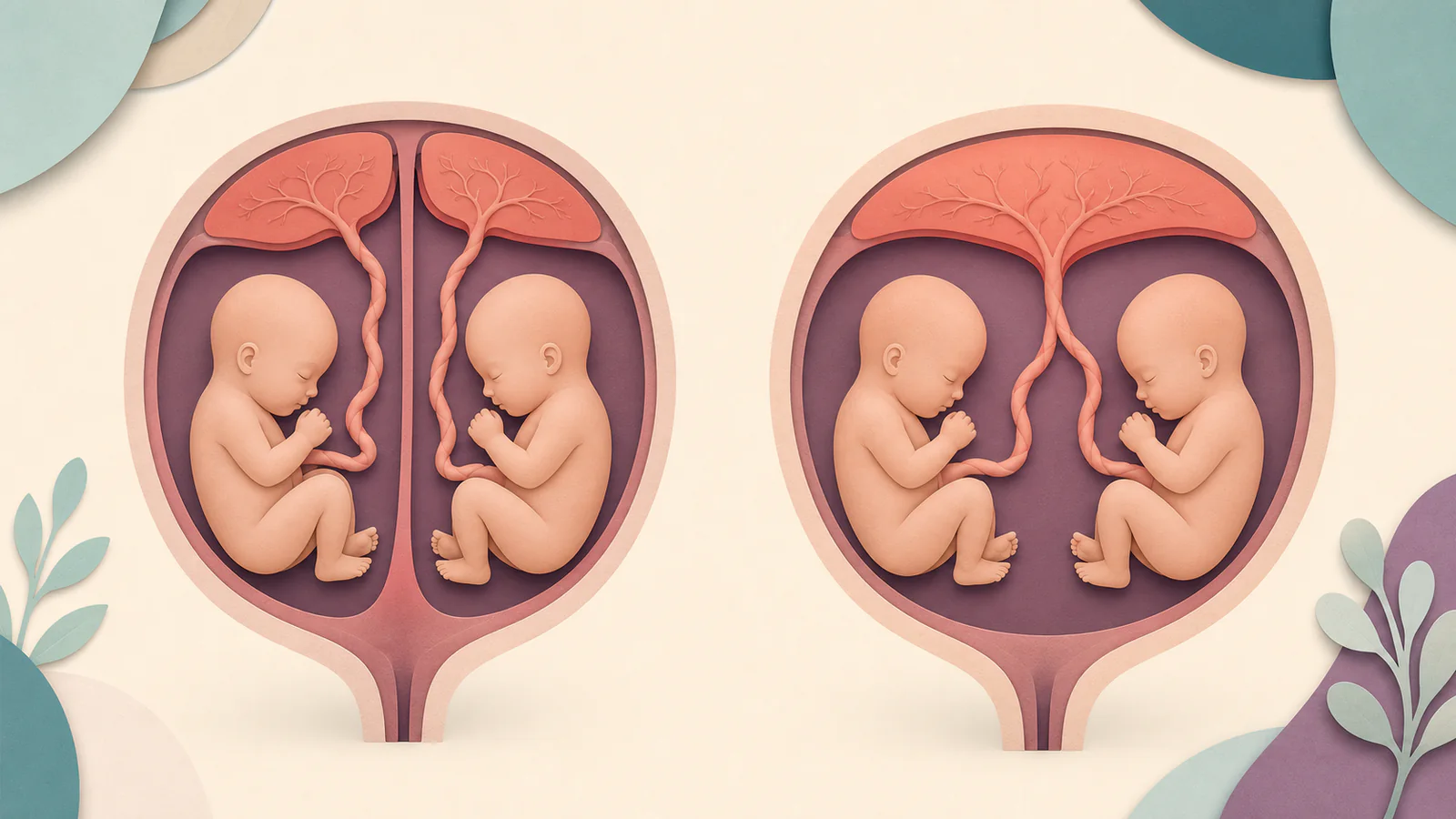
Dichorionic usually means each baby has a separate placenta. Monochorionic means the babies share a placenta. This matters because shared placentas can require more specific monitoring, so chorionicity is one of the most important early details to ask about in a twin pregnancy.
NICE recommends determining chorionicity and amnionicity by ultrasound when a twin or triplet pregnancy is detected. NHS explains that sharing a placenta changes monitoring and risk.
Dichorionic usually means each baby has a separate placenta. Monochorionic means the babies share a placenta. That single detail can change how often you are scanned and what your team watches for.
TwinPare takeaway
This is one of the most useful twin-pregnancy words to learn early. It is not about labels for curiosity; it is about care planning.
Key points
- Chorionicity describes whether babies have separate placentas or share one.
- Amnionicity describes whether babies have separate amniotic sacs.
- Monochorionic pregnancies need specific monitoring because shared placentas can bring specific risks.
Questions to ask your care team
- Is this pregnancy dichorionic or monochorionic?
- Is amnionicity clear from the scan?
- Does the result change my scan schedule?
Important caution
Do not infer risk level from identical/fraternal language alone. The care team needs ultrasound-based placental and membrane information.