
Quick answer
What is twin-to-twin transfusion syndrome?
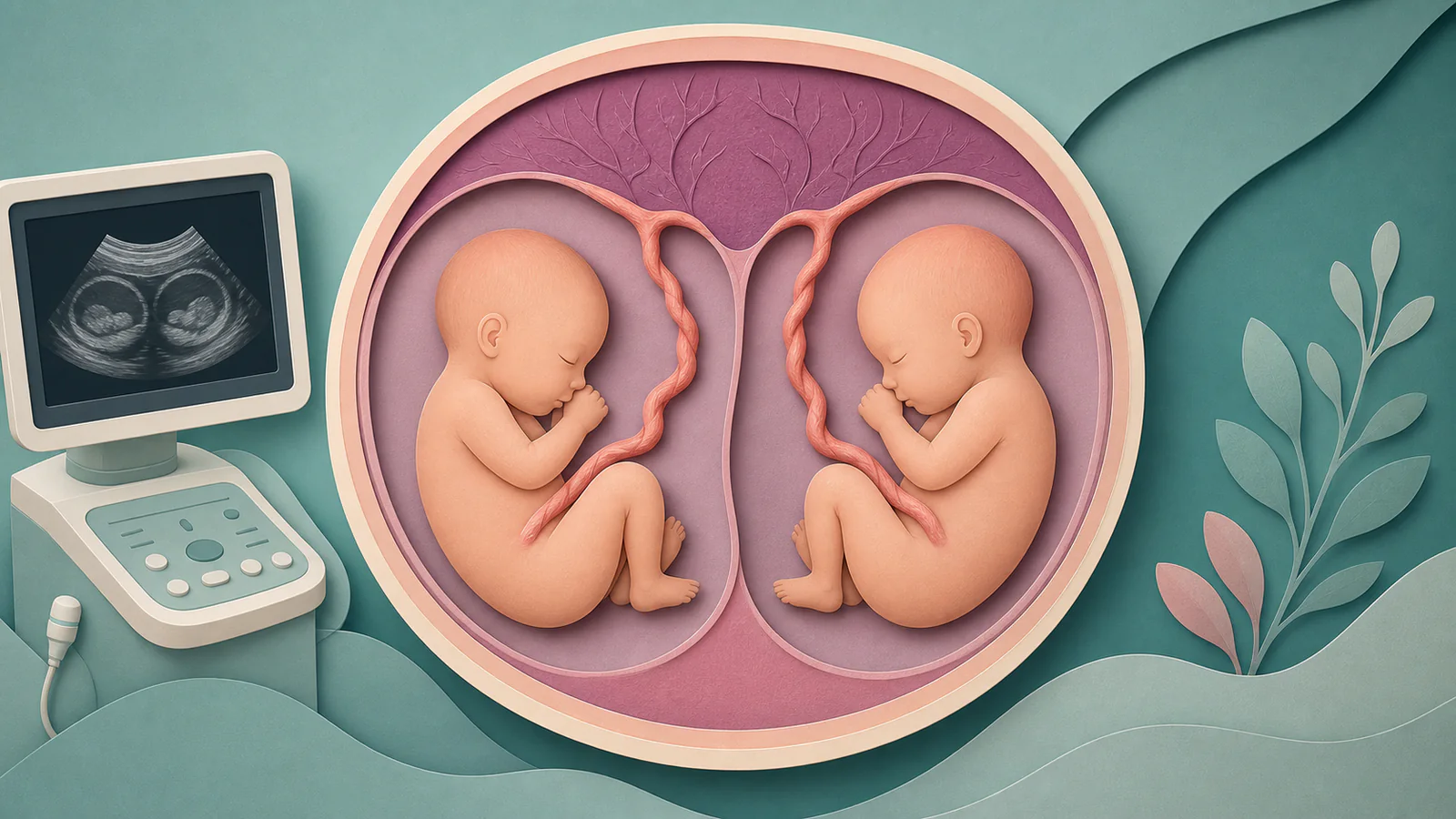
Twin-to-twin transfusion syndrome, or TTTS, is a condition linked to twins who share a placenta. It involves unbalanced blood flow between the babies and is monitored by qualified maternity or fetal medicine teams. This article is for awareness only and should not delay contacting care.
NHS explains that TTTS affects twins who share a placenta and describes unbalanced blood flow. RCOG explains that monochorionic pregnancies share placental blood supply and may develop TTTS.
TTTS is one reason monochorionic twin pregnancies are watched closely. It is not something parents can diagnose from a general article, but it is a term worth recognizing if your babies share a placenta.
TwinPare takeaway
If your care team says the twins share a placenta, ask how TTTS screening works and what changes should prompt contact.
Key points
- TTTS is linked to twins who share a placenta.
- Monitoring is usually scan-based and handled by qualified maternity or fetal medicine teams.
- The goal for parents is awareness and timely communication, not self-diagnosis.
Questions to ask your care team
- Are my twins monochorionic?
- How will you screen for TTTS?
- Who should I contact if I am worried between scans?
Important caution
TTTS can be serious. This radar item is not a diagnostic guide and should not delay contacting qualified care.